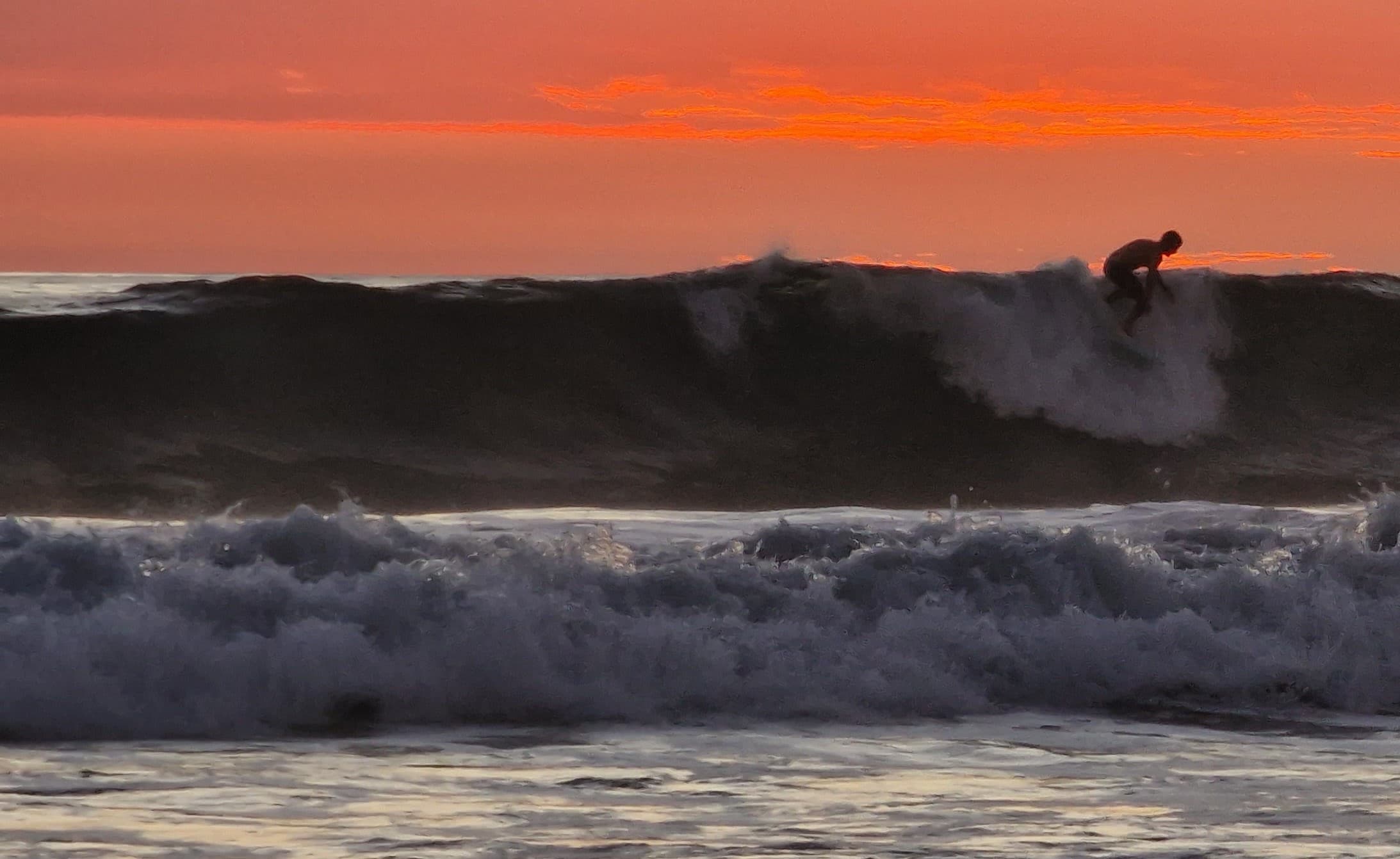
Costa Rica is the perfect place to catch your first wave.
Most of the people who ask me about surfing have never stood on a board. I match you with the right beach, the right instructor, and the right week for your first lesson.
You don't need to already know how to surf
Most people who reach out about surfing aren't chasing a specific wave. They're a family with kids who want one good beach day, a couple fitting in a lesson between hikes and waterfalls, or someone who's always wanted to try it and finally has the week to do it.
What I've built is a clear picture of which beaches actually work for a first lesson, which ones turn into a frustrating afternoon, and which instructors are patient with someone who has never paddled before.
That's the part most surf guides skip. They'll tell you where the waves are good. I tell you where they're good for you.
The right spot depends on more than the waves
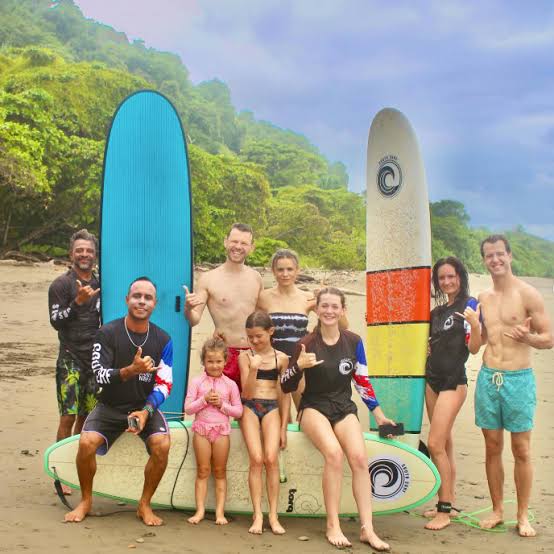
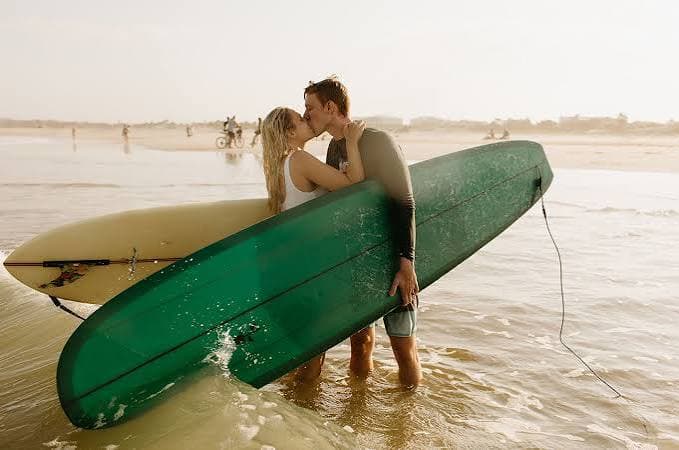
A family with young kids and a couple chasing the most scenic beach in Costa Rica shouldn't end up in the same town. Budget, crowd tolerance, and season point toward different spots — even when the waves are equally beginner-friendly.
The gentle beach breaks that make Guanacaste popular for first lessons come with higher prices and bigger crowds in peak season. A short drive further, the same kind of wave shows up quieter and cheaper, just without the name recognition.
I plan around that trade-off constantly, matching the town that gives you the wave you need without the price tag or the crowd that usually comes with it.
I recommend surf schools I know personally
Over the years I've narrowed my recommendations to a small group of locally owned surf schools I trust.
They're the instructors I've seen encouraging nervous children, patiently helping complete beginners, and taking the time to make people feel comfortable in the water.
Because I work with them regularly, you'll also benefit from fair local prices rather than inflated tourist rates.
What actually helps on your first day
The small, practical details that make more difference than any amount of natural balance. See the Safety page for more on handling the tropical sun.
Sun protection matters more than the waves
The sun catches more first-time surfers off guard than the ocean does. A rash guard and reef-safe sunscreen make more difference than any amount of paddling technique.
Two lessons beat one
Most people spend their first lesson just learning to read the water and pop up. The part that actually feels like surfing usually shows up on lesson two, once the basics stop taking all your attention.
Paddling is the hard part, not standing
The muscles that get tired are your arms, not your legs. Nobody warns people about that, and it's the main reason first mornings feel harder than expected.
Footwear depends on the beach
Sand-bottom beaches need nothing. Reef breaks need reef shoes. I'll tell you which one you're dealing with before you show up.
It usually only takes one wave
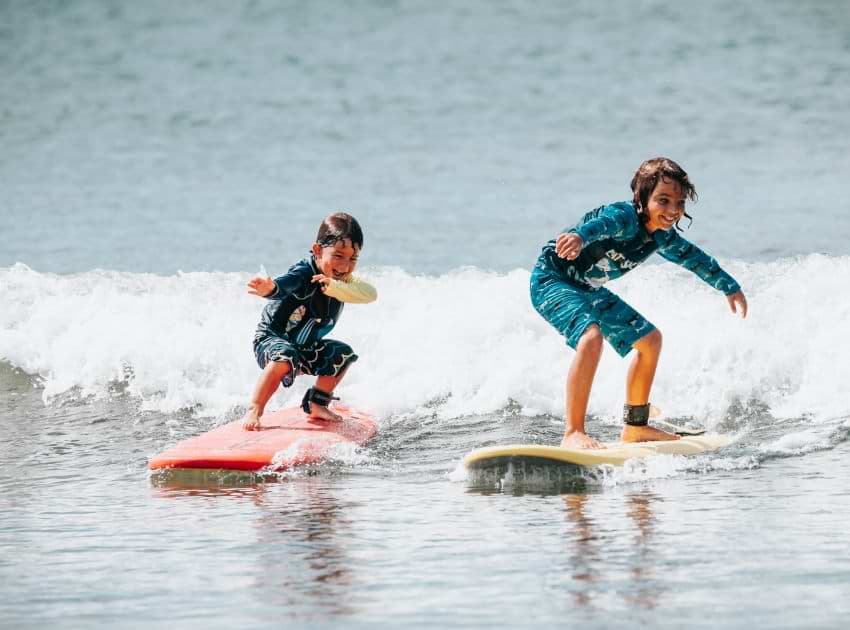
One of my favorite parts of planning these trips is what comes after. I get messages from parents who watched their kid stand up for the first time, or from someone in their fifties who assumed this kind of thing wasn't for them anymore.
You don't need to be athletic or coordinated. You need the right wave, a patient instructor, and someone who put you there for a reason.
Ready to plan your surf days?
I'll match you with the right beach, the right season, and a surf school that actually fits who's learning, then build the rest of your Costa Rica trip around it.