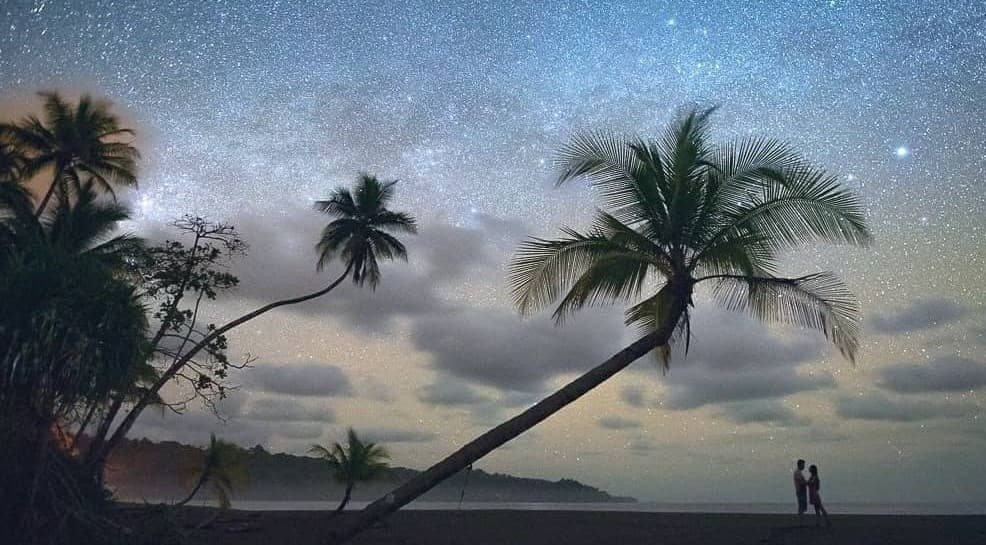
The sky above Costa Rica is something else entirely.
I stargaze from my farm in the hills west of San José, from the Dota mountains where a friend has land at 2,000m, and from the Nicoya Peninsula where the Pacific horizon opens up completely. In a tropical country, the biggest challenge isn't light pollution — it's clouds. My neighbors taught me the lunar calendar: when to plant, when to harvest, when the rains come and when they don't. That same calendar tells me when the sky will be clear.
Best dark sky spots in Costa Rica
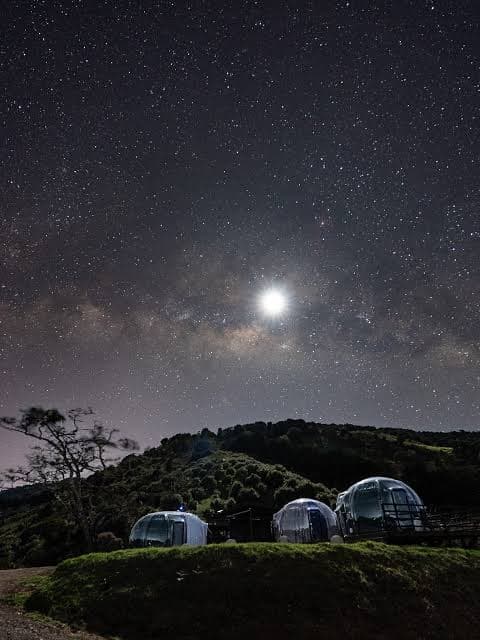
Puriscal Region Hills
30 min from San José · Minimal light pollution · Milky Way to the south
Sitting at 1,100m in the hills west of the capital, this region is far enough from city glow that the Milky Way is visible to the naked eye. I know exactly which ridge gives the clearest view.
When: Year-round on clear nights. Best: dry season, new moon.
Cerro de la Muerte
3,400m altitude · Arctic-clear air · Excellent dark horizon
The highest accessible point on the Pan-American Highway. At 3,400m the air is thin, cold, and crystal clear, one of the darkest spots near San José.
When: Dry season only. Road can be rough in rain. Bring warm layers, it drops to 5°C.
Osa Peninsula
Most isolated region of Costa Rica · Zero surrounding light · Southern sky
Costa Rica's most remote region. Corcovado jungle swallows all light. On a moonless night, the southern Milky Way is overwhelming.
When: December–April (dry). Access can be difficult, plan ahead.
Arenal Volcano Area
Volcano silhouette + stars · Night walks on the Mistico suspension bridges
Some lodges near Arenal offer night astronomy walks on the grounds. The volcano's cone framing the sky is unforgettable, when it clears.
When: Best in dry season (November–April) when Arenal's summit clears.
What you can see
Ready to plan your stargazing night?
Costa Planner can build a night at the right spot into your broader Costa Rica itinerary — with accommodation nearby and clear sky timing checked in advance.